News

How Can Train Station Steel Structure Shorten Construction Schedules Without Compromising Safety?

2026-01-06 0 Leave me a message

Article Abstract

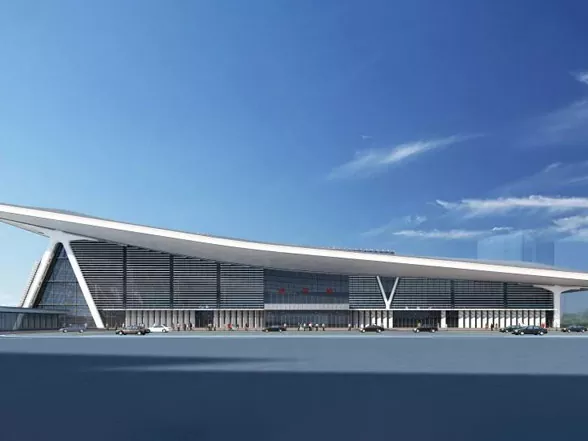
Building a station is rarely “just a building.” It’s a live transportation node that must stay safe, readable, and comfortable while handling heavy crowd loads, vibration, noise, changing weather, and tight handover dates. That’s why many owners are shifting to Train Station Steel Structure systems, especially for large-span concourses, platform canopies, and landmark roof forms.

This guide breaks down the most common project pain points (schedule risk, cost uncertainty, complex geometry, passenger-flow constraints, and long-term maintenance), then shows how a well-designed steel solution—paired with factory fabrication and disciplined site assembly—can reduce uncertainty without trading away durability. You’ll also find checklists, comparison tables, and FAQs to support early decisions and supplier evaluation.


Outline of What You’ll Learn

  • How Train Station Steel Structure designs handle big spans, dynamic loads, and complex architectural forms
  • Where schedules slip most often and how prefabrication reduces that exposure
  • Which structural system fits concourses, canopies, and intermodal connections
  • What documentation and inspection steps prevent costly rework
  • How to think about corrosion, fire protection, and lifecycle maintenance from day one

What Typically Goes Wrong in Station Projects

Train Station Steel Structure

Station projects are “high-constraint” by nature: passenger circulation must be intuitive, structural spans must stay clear for sightlines and wayfinding, and construction often happens beside active tracks. The result is a familiar set of pain points:

Schedule compression that becomes unsafe
  • Late design decisions trigger redesign of roof geometry, supports, and drainage
  • On-site cutting and improvisation increase safety incidents and inspection failures
  • Rail operating windows limit crane time and deliveries
Budget volatility and change orders
  • Unclear connection details cause steel tonnage growth midstream
  • Clashes between structure, MEP, and facade lead to rework
  • Temporary works and traffic management costs get underestimated
Long-term maintenance gets ignored until it’s painful
  • Coatings and drainage details are not designed for real exposure conditions
  • Access for inspection is difficult after ceiling and cladding go in
  • Vibration, humidity, and cleaning chemicals accelerate wear

Pain Point to Solution Map

Pain point Typical root cause Steel-structure-focused fix
Late schedule slips Too much field fabrication and uncertain interfaces Factory-made members, standardized connections, and a clear erection sequence
Overcrowded concourse supports Short spans force more columns Large-span trusses or space frames to keep circulation open
Rework from clashes 2D coordination and fragmented deliverables Coordinated 3D modeling and pre-approved openings and sleeves
Corrosion and coating failures Drainage, detailing, and exposure not accounted for Right coating system plus “no water traps” detailing and access planning

Why Steel Performs Well for Rail Hubs

A thoughtfully engineered Train Station Steel Structure is popular for one simple reason: it solves multiple problems at once. Steel enables long clear spans, predictable fabrication tolerances, and faster assembly—especially when the design is optimized for lifting and bolted connections.

  • Large-span freedom for waiting halls, concourses, and canopies without a forest of columns
  • Factory precision that reduces site uncertainty and helps inspections go smoother
  • Phasing flexibility so you can build around rail operations, passenger routes, and constrained staging
  • Architectural expression for curved or landmark rooflines without forcing complicated formwork
  • Upgradeable systems where future expansions and retrofit connections can be planned early

If you’re aiming for a station that feels open, bright, and easy to navigate, steel also plays nicely with modern envelopes—glass, metal panels, daylighting, and integrated MEP—when interfaces are clearly defined.


Choosing the Right Structural System

Not every station element needs the same structural logic. A central concourse might demand a dramatic clear span, while platform canopies might prioritize repetition, speed, and easy replacement. Use the table below to match the system to your priorities.

System option Where it fits best Owner benefits Watch-outs
Portal frame Smaller halls, service buildings, secondary volumes Cost-effective, fast, simple erection May add columns if spans grow too large
Long-span truss Concourse roofs, transfer halls, signature canopies Open space, efficient material use for big spans Needs strong coordination for MEP, lighting, and maintenance access
Space frame or grid Complex roof geometries and wide coverage areas Uniform load distribution, supports expressive forms More nodes and connections to manage in QA
Steel arch or hybrid Landmark halls and long canopy spans Strong visual identity, good span capability Transport constraints for large members and specialized erection planning

A strong Train Station Steel Structure concept is not “one system everywhere.” It’s a smart combination that respects passenger flow, construction access, and future maintenance.


A Field-Proven Delivery Workflow

Faster construction doesn’t come from rushing; it comes from removing uncertainty. Below is a workflow many owners use to keep station projects predictable while still meeting ambitious handover targets.

  1. Define operating constraints early such as rail possession windows, crane exclusion zones, and passenger reroutes.
  2. Lock structural “interfaces” including roof drainage paths, expansion joints, facade attachment lines, and MEP corridors.
  3. Design for assembly by minimizing unique parts, standardizing bolt patterns, and planning lifts around available equipment.
  4. Fabricate with traceability using heat numbers, weld logs, coating records, and dimensional checks.
  5. Pre-assemble critical nodes (when feasible) to de-risk complex geometry before it reaches site.
  6. Erect in a phased sequence that keeps safe public separation and allows partial commissioning.
  7. Close out with maintainability including access points, inspection routes, and spare part planning.

When this workflow is executed well, station owners usually see fewer surprises: fewer clashes, fewer “field fixes,” and fewer last-minute design changes that ripple into rail operations.


Quality Control That Actually Protects Your Budget

Quality control is not paperwork theater—it’s the difference between a smooth erection and weeks of rework. For a Train Station Steel Structure, your QA plan should focus on the items that most often cause delays.

Inspection Checklist for Station Steel

  • Dimensional accuracy of primary members, especially at splice points and bearing seats
  • Connection readiness including hole alignment, bolt grades, and torque requirements
  • Welding verification aligned to the specified standard and documented for critical joints
  • Coating thickness and coverage with special attention to edges, corners, and hidden surfaces
  • Trial fit for complex nodes and curved assemblies before shipping
  • Packaging and transport protection to prevent coating damage and distortion

A practical rule: if a defect is easy to fix in the factory, it will be expensive to fix on site—especially next to active rail operations.


Durability and Maintenance Planning
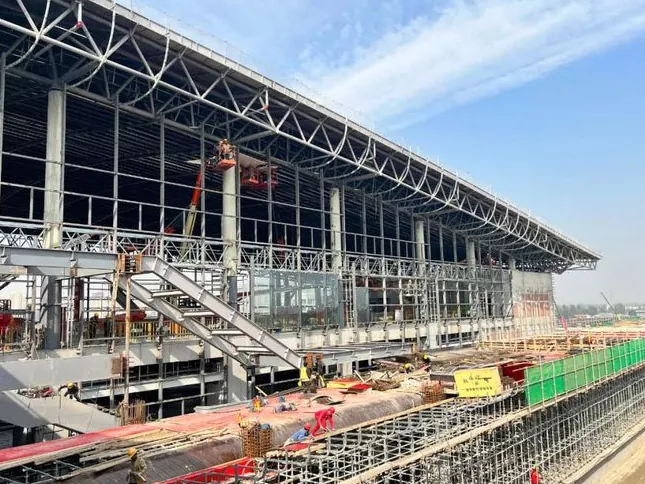
Train Station Steel Structure

The station you hand over is not the station you’ll operate in year ten. Weather, foot traffic, cleaning, vibration, and micro-movements all add up. A durable Train Station Steel Structure plan looks beyond initial strength and considers how the building will be inspected, repaired, and updated.

Design Moves That Reduce Lifecycle Headaches

  • Detail for drainage so water cannot pool on plates, within hollow sections, or behind cladding interfaces
  • Choose coatings for reality matching humidity, salt exposure, industrial pollutants, and cleaning routines
  • Plan access for inspections around nodes, bearings, gutters, and expansion joints
  • Account for movement by aligning expansion joints with architectural joints and protecting seal interfaces
  • Make replaceable elements replaceable especially canopy panels, localized beams, and non-primary attachments

If you’ve inherited a station with corrosion surprises, you already know the lesson: durability is rarely about “more material.” It’s about the right details in the right places.
How to Evaluate a Steel Structure Partner

The best supplier is not just a fabricator; it’s a partner who understands transport constraints, erection sequencing, inspection expectations, and the realities of building next to live rail lines. When owners shortlist partners for a Train Station Steel Structure, these criteria reduce risk fast:

  • Engineering support that can respond quickly to node optimization and interface coordination
  • Fabrication capacity with documented process control, stable output, and clear lead times
  • Project documentation including material traceability, weld/coating records, and as-built deliverables
  • Packaging and logistics planning that respects oversized transport, site access, and lifting points
  • Experience with complex geometry such as curved roofs, free-form canopies, and large-span assemblies

For example, Qingdao Eihe Steel Structure Group Co., Ltd. is known for delivering steel building systems across a range of complex public and industrial applications. For station projects, a capable partner should be able to coordinate main frames, roof systems, and enclosure interfaces in a way that supports predictable assembly and long-term serviceability.


FAQ

Q: Is a Train Station Steel Structure always faster than concrete?

A: It is often faster when the project is designed for prefabrication and assembly. If the design relies on heavy field modification or unclear interfaces, speed advantages can shrink. The biggest gains usually come from factory fabrication, standardized connections, and a clear erection plan aligned with rail operating windows.

Q: How do steel stations handle large crowds and dynamic loads?

A: Crowd loading, vibration considerations, wind uplift on canopies, and seismic demands are addressed in the structural design stage through appropriate member sizing, bracing strategies, and connection detailing. For concourses, long-span systems also help keep circulation paths open and reduce bottlenecks around columns.

Q: What station areas benefit most from steel construction?

A: Large-span waiting halls, transfer concourses, platform canopies, and roof features typically benefit the most. Steel is also useful for future expansions, because additional bays or connectors can be planned into the original structural logic.

Q: How do you control corrosion risk in humid or coastal environments?

A: Start with “no water trap” detailing, then choose a coating system matched to the exposure level. Add practical access for inspection and touch-up, protect vulnerable edges, and ensure drainage paths stay clear. Corrosion control is a system, not a single product choice.

Q: What documents should an owner request before approving fabrication?

A: At minimum: coordinated drawings, connection details, material specifications, fabrication tolerances, welding and coating procedures, inspection checkpoints, and an erection sequence narrative. Clear documentation reduces surprises at the site gate.


Next Step

If your station project is fighting a tight handover date, limited site access, or a high-visibility architectural roofline, a well-planned Train Station Steel Structure approach can turn those constraints into something manageable.

Want a practical concept review or a budget-aligned structural proposal that respects your phasing and inspection requirements? Contact us to discuss your station scope, span targets, environment, and schedule priorities—then let’s map a buildable path from design to commissioning.

Related News
Leave me a message
X
We use cookies to offer you a better browsing experience, analyze site traffic and personalize content. By using this site, you agree to our use of cookies. Privacy Policy
Reject Accept