
QR Code

Products
Contact Us


E-mail

Address
No. 568, Yanqing First Class Road, Jimo High-tech Zone, Qingdao City, Shandong Province, China


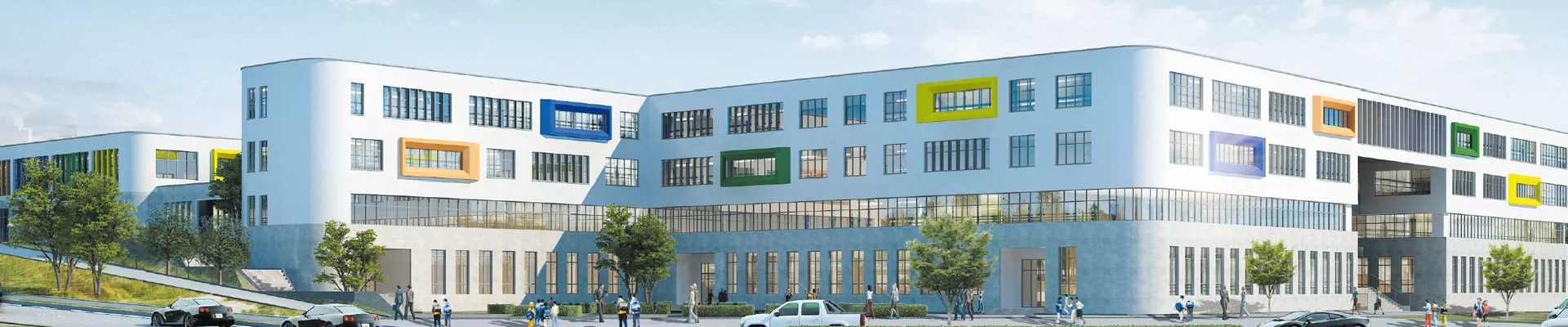
A hospital project rarely fails because the team “didn’t want it enough.” It fails when time, compliance, and coordination collide: approvals take longer than planned, site work drifts, MEP routes clash with medical workflows, and budget shocks appear right when procurement is locked. A Hospital Steel Building can reduce many of these risks—but only if it is approached as a healthcare system, not just a fast structure.
This guide breaks down what decision-makers should ask for before committing: speed without shortcuts, infection-aware detailing, flexible planning grids, resilient performance, and a build process that keeps operations and safety in control. Along the way, you’ll find a practical outline, a scannable checklist, a comparison table, and FAQs to help you evaluate suppliers and designs. You’ll also see how Qingdao Eihe Steel Structure Group Co., Ltd. typically supports hospital-focused steel building projects from concept coordination to delivery planning.
Hospitals aren’t “bigger offices.” They are regulated, equipment-dense environments where layout decisions affect patient outcomes, staff efficiency, and long-term operating costs. Most hospital projects face the same set of friction points:
A Hospital Steel Building can reduce several of these issues—especially schedule and change risk—because it allows more parallel work, more predictable fabrication, and cleaner coordination when the engineering is done early.

Steel construction can compress timelines by shifting labor from unpredictable site work to controlled fabrication. But the “speed” advantage isn’t magic—it comes from a sequence that’s built for parallel progress:
In practice, teams often choose steel for hospital projects when they need a faster route to occupancy, want to reduce rework, or require a building that can evolve as healthcare delivery changes. Suppliers like Qingdao Eihe Steel Structure Group Co., Ltd. typically support this by aligning design decisions with fabrication constraints early—so the structure isn’t “fast,” it’s predictable.
Hospital planning succeeds when the building supports people—patients, clinicians, facilities teams—not just drawings. Before approving a structural concept, ask whether the planning approach supports:
A strong Hospital Steel Building concept often starts with a “planning grid” that balances span efficiency and room modularity. That grid becomes the backbone for everything else: corridors, shafts, MEP routes, and future expansion strategy.
Many hospital delays happen after the structure is “done,” when trades discover clashes and redesign routes on-site. The fix is not more meetings—it’s earlier definition of the systems strategy. You should expect a proposal to address, at minimum:
If you want a Hospital Steel Building to stay flexible, don’t only ask “How fast can you erect steel?” Ask “How cleanly can you coordinate the building systems that make this a hospital?”
Healthcare facilities must keep working through disruptions: storms, seismic activity, power instability, supply interruptions, and shifting clinical loads. A serious hospital steel building plan should address performance topics in plain language:
The goal isn’t to “overbuild.” It’s to build a hospital that stays reliable with real-world maintenance and real-world budgets.
Not every project should choose the same method. Use the table below as a starting point for internal discussions and supplier comparisons.
| Decision Factor | Hospital Steel Building | More Traditional Site-Heavy Construction |
|---|---|---|
| Speed to enclosed structure | Often faster when engineering and procurement are front-loaded | Can be slower due to sequential site dependencies |
| Change management | Better if planning grid and system routes are coordinated early | Changes may cause higher demolition/rework during later phases |
| Quality consistency | Strong repeatability with controlled fabrication processes | More variability based on site conditions and labor availability |
| MEP coordination risk | Lower when penetrations and shafts are planned before fabrication | Higher if routing is finalized after major structure is in place |
| Future expansion flexibility | High when expansion joints, bay logic, and capacity planning are designed in | Depends heavily on original structure and utility pathways |
| Lifecycle maintenance | Can be efficient with good corrosion protection and access planning | Varies widely; access constraints can increase long-term costs |

If you only take one thing from this article, take this: the best hospital projects are the ones that ask the right questions early. Use this checklist to pressure-test proposals for a Hospital Steel Building.
When you evaluate suppliers using this lens, “fast” becomes “controlled,” and “low cost” becomes “low regret.”
Q: Is a Hospital Steel Building only suitable for temporary or emergency facilities?
A: No. Steel is used for both rapid deployment and long-term hospital buildings. The difference is in planning depth, envelope strategy, and systems integration—not the material itself.
Q: How do we keep a steel hospital building adaptable for future medical upgrades?
A: Start with a consistent structural grid, protect vertical shafts, reserve routes for added services, and plan plant capacity with realistic growth assumptions. Adaptability is designed, not added later.
Q: What causes most “surprise costs” in hospital projects?
A: Late coordination of MEP routes, unclear package boundaries, and change orders driven by evolving equipment needs. A coordinated early-stage model and clear scope definitions reduce these shocks.
Q: Can steel construction help when building near an operating hospital?
A: Often, yes—because controlled fabrication can reduce on-site time, and phased sequencing can be planned more predictably. The key is a site logistics plan that protects operations.
Q: What should we ask a supplier during the first technical meeting?
A: Ask how they coordinate penetrations and shafts, what information they need before fabrication, how they manage changes, and what their typical delivery milestones look like from drawings to on-site assembly.
Q: Where does Qingdao Eihe Steel Structure Group Co., Ltd. typically add value?
A: Many buyers look for support that connects design intent to fabrication reality—helping teams plan structural grids, componentization, and delivery sequencing in a way that reduces field rework and keeps schedules more stable.
If you’re planning a new facility, an expansion wing, or an emergency-ready treatment area, don’t settle for a “generic building” approach. A Hospital Steel Building works best when the structure, systems, and clinical workflow are coordinated as one.
Tell Qingdao Eihe Steel Structure Group Co., Ltd. your site location, target departments, timeline goals, and any special requirements (phased construction, resilience targets, future expansion needs). Their team can help you translate operational needs into a practical steel building plan with clearer scope, cleaner coordination, and fewer surprises.
Ready to move forward? Contact us to discuss your hospital project and request a tailored proposal that matches your schedule, compliance needs, and budget expectations.
No. 568, Yanqing First Class Road, Jimo High-tech Zone, Qingdao City, Shandong Province, China
Teams