QR Code

Products
Contact Us


E-mail

Address
No. 568, Yanqing First Class Road, Jimo High-tech Zone, Qingdao City, Shandong Province, China


Abstract
If you’ve ever watched a construction schedule slip because of weather, labor gaps, material delays, or design changes, you already know the real “pain” isn’t just the building—it’s uncertainty. A Steel Frame Building is often chosen because it turns many on-site unknowns into controlled, repeatable steps: engineered design, factory fabrication, and fast erection. This article breaks down the decisions that matter most—cost drivers, lead times, durability, safety, and long-term performance—so you can choose confidently and avoid the most common project traps.

Most buyers don’t lose sleep over “steel vs. concrete” as a concept. They lose sleep over very specific outcomes: production delays, rent starting before the building is usable, quality problems that show up after handover, and surprise expenses that appear when it’s too late to redesign.
If this sounds familiar, you’re not alone. The good news is that many of these problems are avoidable when your building system is designed for control and repeatability.
A well-planned Steel Frame Building helps because the core structure is engineered, fabricated, and assembled with a high level of dimensional control. That doesn’t magically solve every site issue—but it does reduce the number of variables that can derail you.
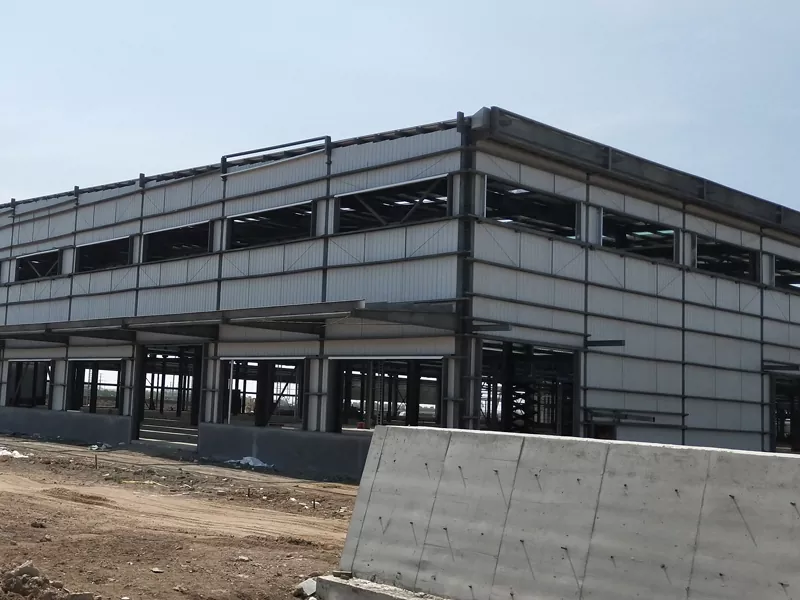
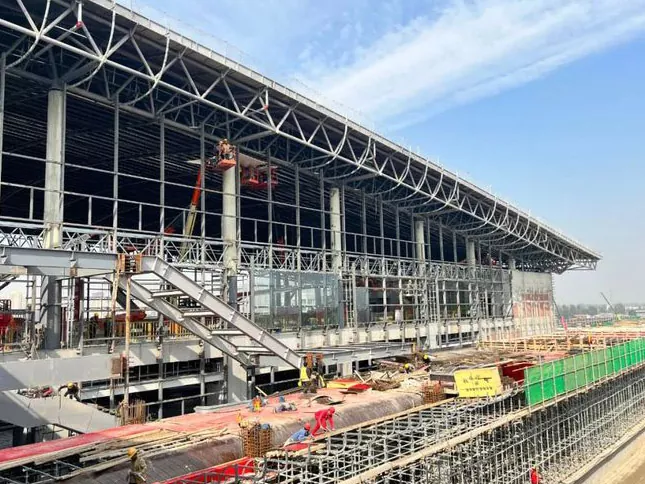
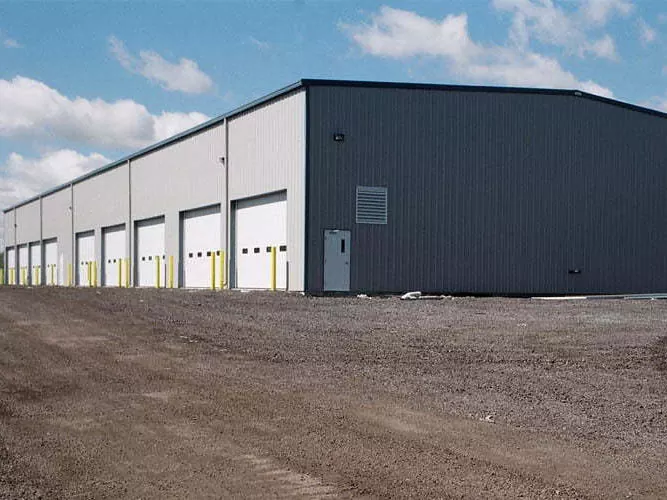
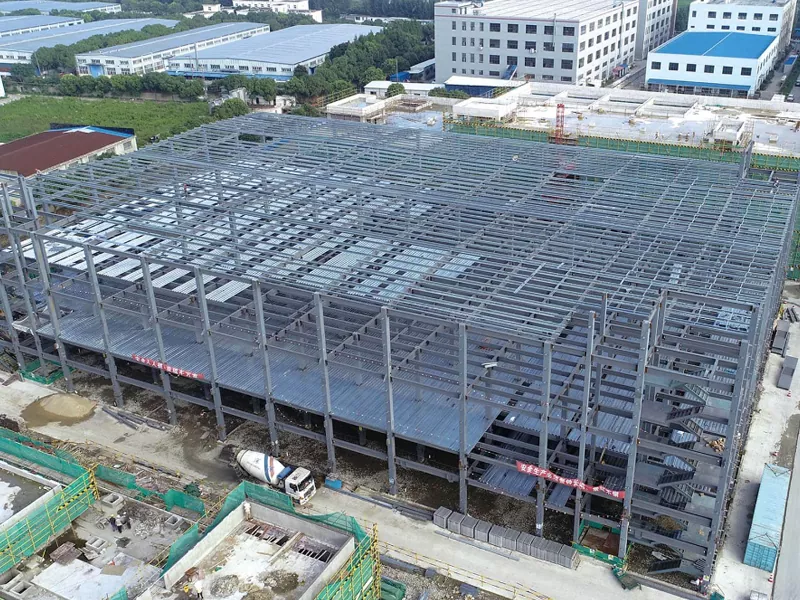
Think of a Steel Frame Building as an engineered skeleton plus the systems that make it functional: the main frames (columns and rafters), secondary members (purlins and girts), bracing, connection plates/bolts, and the exterior envelope (roof and wall panels, insulation options, trims, gutters, doors, and windows as specified).
The biggest misunderstanding is assuming “steel building” automatically includes everything you need. In practice, clarity comes from defining the package boundary early: what’s included, what’s optional, and what’s handled by local contractors.
| Category | Typically included in a steel building supply scope | Often handled locally (confirm early) |
|---|---|---|
| Primary structure | Frames, base plates, bracing, bolts, shop drawings | Anchor bolts installation, grouting, on-site alignment |
| Secondary members | Purlins, girts, eave struts, sag rods | Any special framing around equipment openings |
| Building envelope | Roof/wall panels, trims, flashings (per specification) | Sealant discipline, penetrations, local waterproofing details |
| Thermal & moisture control | Insulation systems if specified | Vapor barriers, condensation strategy coordination with HVAC |
| Openings & accessories | Doors/windows/skylights if listed | Dock equipment, ramps, interior partitions |
| Civil & utilities | Not usually | Foundations, slab, drainage, utilities, paving |
Tip: If you want predictable costs, treat “scope boundary” as a contract item, not a conversation.
A Steel Frame Building often wins on cost not because steel is always “cheaper,” but because it can reduce expensive uncertainty: fewer reworks, faster enclosure, and simpler expansion. The budget breaks when important items are left undefined.
Rule of thumb: Most “surprise costs” are not surprises—they’re missing decisions.
| Budget pressure point | What causes it | What to decide early |
|---|---|---|
| Foundation and slab costs | Soil conditions, drainage, heavy equipment loads | Geotech results, slab thickness, forklift/stacking loads, anchor layout |
| Cladding upgrades | Climate demands, condensation control, acoustics | Panel type, insulation system, vapor control approach, roof slope and drainage |
| Large openings | Hangar doors, dock doors, tall bays | Door sizes, locations, reinforcement, wind/impact requirements |
| Internal loads | Mezzanines, cranes, suspended systems | Crane capacity, runway beams, future mezzanine zones, point loads |
| Compliance | Wind, seismic, fire strategy, occupancy type | Design criteria and local review requirements before fabrication starts |
| Change orders | Layout changes after drawings are frozen | Clear process for approvals, shop drawing sign-off, and revision control |
If your goal is a stable number, don’t ask, “How much per square meter?” Ask, “What assumptions are baked into this price?” Then document them. A credible supplier will be comfortable listing what’s included and what is not.
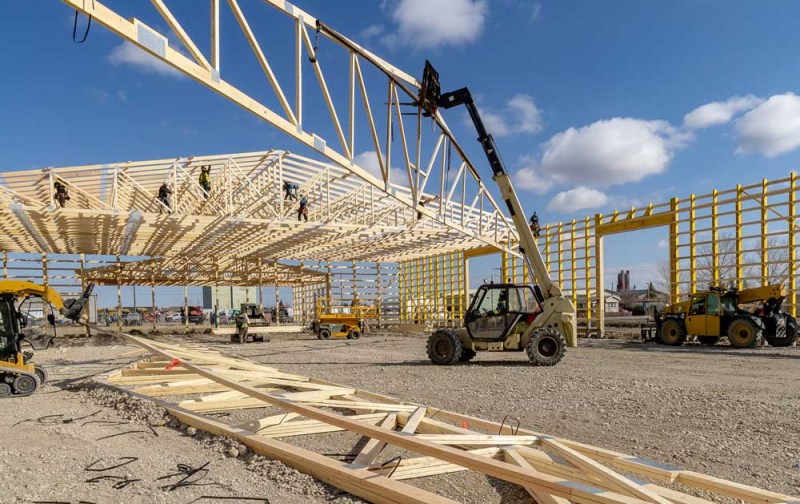
Speed is a major reason people choose a Steel Frame Building, but speed doesn’t come from rushing. It comes from sequencing: design first, fabrication next, then efficient erection with fewer trades competing on site.
The hidden schedule killer is usually not the steel itself—it’s coordination. For example, if your HVAC contractor needs roof penetrations but their drawings arrive late, you either stop work or create risky field modifications. Avoid that by mapping every penetration and load early.
A Steel Frame Building is known for structural reliability, but “performance” is broader than strength. Your building must stay dry, resist corrosion, remain comfortable, and behave predictably under real-world conditions.
Performance is a system. Great steel with weak detailing still produces leaks, condensation, and callbacks.
If you operate sensitive equipment or store moisture-sensitive products, don’t treat “insulation” as an upgrade you decide last. Treat it as part of risk management. Many expensive issues—mold, dripping ceilings, corrosion acceleration—begin as small moisture control mistakes.
One advantage of a Steel Frame Building is the ability to adapt the internal space over time. If your business changes, you may add storage racks, cranes, partitions, mezzanines, or extend the building length. Designing for that future now is usually cheaper than retrofitting later.
| Future need | Design move to consider now | Why it matters |
|---|---|---|
| Expansion | Plan an “expansion end” with removable wall panels and aligned column grids | Reduces demolition and downtime later |
| Cranes | Reserve headroom, specify crane runway loads, confirm deflection limits | Avoids costly structural strengthening |
| Mezzanine | Predefine zones and point loads; plan stair and opening locations | Prevents slab and frame rework |
| Truck flow | Place doors for one-way circulation; protect corners; plan docks | Improves safety and logistics efficiency |
| Process equipment | Lock in penetrations, curbs, and hanging loads early | Protects roof integrity and schedule |
Choosing the right building partner is less about flashy brochures and more about disciplined documentation. You want to know how drawings are approved, how materials are traced, how fabrication tolerances are controlled, and how packaging is handled so site crews don’t waste days sorting parts.
If a supplier can’t clearly answer “who is responsible for what,” you should expect disputes later. Clear scope is cheaper than conflict.

These are the issues that repeatedly show up across industrial and commercial builds. The fix is almost always early clarity.
If you want a quick self-check: can your team point to a single document that defines your building’s scope boundary, design criteria, openings schedule, insulation approach, and interface responsibilities? If not, that’s where you’ll feel pain later.
If you’re exploring a Steel Frame Building solution and want fewer surprises, your best move is working with a team that takes coordination seriously—from early drawings to packaging and part identification. Qingdao Eihe Steel Structure Group Co., Ltd. supports projects by focusing on clear deliverables, disciplined drawings, and practical buildability so your site crew can assemble efficiently.
If you’d like to see a product-focused overview, you can also visit the steel frame building page on the company website and compare it against your project requirements. The most valuable conversation usually starts with your site conditions, climate, loading needs, and door/equipment plan.
Q How long does a Steel Frame Building take from order to installation
A Timelines depend on design complexity, approval speed, and site readiness. In many cases, the critical path is drawing approval plus foundation readiness. If your foundations and logistics are planned well, erection can move quickly because parts arrive pre-fabricated and labeled.
Q Is a Steel Frame Building suitable for coastal or humid environments
A Yes, but corrosion strategy matters. Ask for a coating system aligned with your environment and confirm how roof/wall interfaces handle moisture. Good detailing plus proper coatings are usually more important than choosing “thicker steel.”
Q What information should I prepare before requesting a quotation
A Building dimensions, location, wind/seismic criteria (or the local authority requirements), intended use, door sizes, equipment loads (cranes, racks, mezzanines), preferred envelope/insulation approach, and a simple site plan showing access and drainage.
Q Will a Steel Frame Building be too hot or too cold inside
A Comfort depends mainly on the envelope system and ventilation strategy, not the steel frame itself. Choose insulation and vapor control based on climate and operating hours. If condensation risk exists, treat moisture control as a core requirement, not an add-on.
Q Can I expand the building later
A Often yes, especially if you plan an expansion end and keep column grids consistent. Mention expansion intent early so the structure and cladding can be detailed for future extension with minimal disruption.
If your priority is a building that goes up fast and performs reliably for years, start with clarity: define your loads, openings, envelope expectations, and scope boundary. Then choose a partner who treats drawings and interfaces as seriously as the steel itself.
No. 568, Yanqing First Class Road, Jimo High-tech Zone, Qingdao City, Shandong Province, China
Teams